Generative Engine Optimization (GEO): How To Get Your Business Cited By Chatgpt, Perplexity And Google AI Overviews
Search is becoming an answer, not a list of links. GEO is how you become the source those answers cite. Here is what actually moves the needle, and what is just noise.
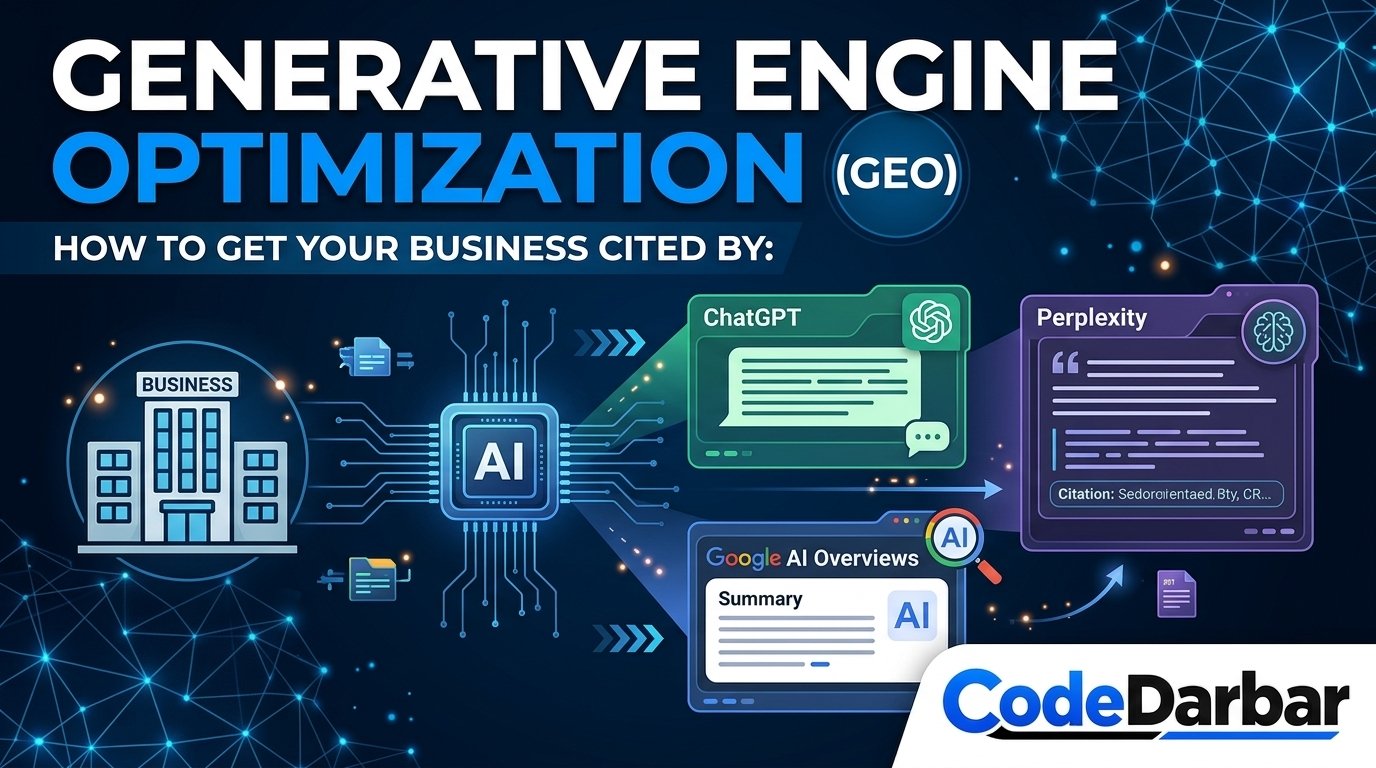
Ask ChatGPT, Perplexity or Google's AI Overview "which agency should I hire for X" and you get a short, confident answer with two or three sources. If your business is not one of those sources, you were never in the running. That is the problem Generative Engine Optimization (GEO) solves, and it is now part of every marketing plan we build.
What GEO is, in one paragraph
Traditional SEO earns you a position in a ranked list. GEO earns you a citation inside a generated answer. The two overlap heavily, because AI engines pull from the same web, but they reward different things. Ranking algorithms reward links and keywords. Language models reward clarity, specificity and consistency: they cite pages that answer a question directly, name entities unambiguously, and agree with other trusted sources.
Why it matters now
Buyers in the UAE, US and UK increasingly research vendors by asking an assistant rather than scrolling results. When the assistant answers, it usually names a handful of companies and stops. There is no page two. If you sell services on expertise, being in that handful is worth more than any single ranking used to be.
The five things that actually move the needle
1. Define your entity clearly
AI engines need to know exactly who you are: one consistent business name, one description of what you do, one location, one founder. Publish that on your site in plain text, back it with Organization, Person and Service schema (JSON-LD), and make sure your LinkedIn, Google Business Profile and directory listings say the same thing. Inconsistent names and vague descriptions are the most common reason good businesses never get cited.
2. Write answer-shaped content
Models extract answers, not vibes. Each important page should contain sentences that can be lifted verbatim as an answer: "Code Darbar builds custom WhatsApp AI assistants for clinics and retailers in the UAE, grounded in the business's own product data." Add FAQ sections with real questions and direct answers. Definitions, comparisons and step lists are quoted far more often than marketing prose.
3. Make your site readable by AI crawlers
Check your robots rules do not block GPTBot, PerplexityBot, ClaudeBot or Google-Extended, unless you have decided to. Publish an llms.txt file that summarises your site for language models. Keep pages server-rendered and fast; content that only appears after heavy client-side JavaScript is often invisible to these crawlers.
4. Earn mentions on sources models already trust
Citations follow authority. Guest articles, industry directories, podcast appearances, reviews on platforms like Clutch or Google, and being quoted in trade publications all teach models that you are a real, referenced entity. This is old-fashioned PR, done with a new goal.
5. Measure it
Once a month, ask the major engines the twenty questions your buyers ask and record who gets cited. Track your share over time. If you are not measuring, you are guessing, and most GEO advice online is exactly that.
What does not work
- Stuffing pages with "AI" keywords. Models are not keyword matchers.
- Publishing hundreds of thin AI-generated articles. They dilute your entity and rarely get cited.
- Paying for "guaranteed ChatGPT placement". Nobody can guarantee what a model says.
Where to start
Run an audit: the questions your buyers ask, who gets cited today, and why. Fix the entity signals first, then rewrite your three most important pages in answer form. Most businesses see their first citations within a few months of doing those two things well. If you want us to run that audit, start with a free audit or read about our GEO service.