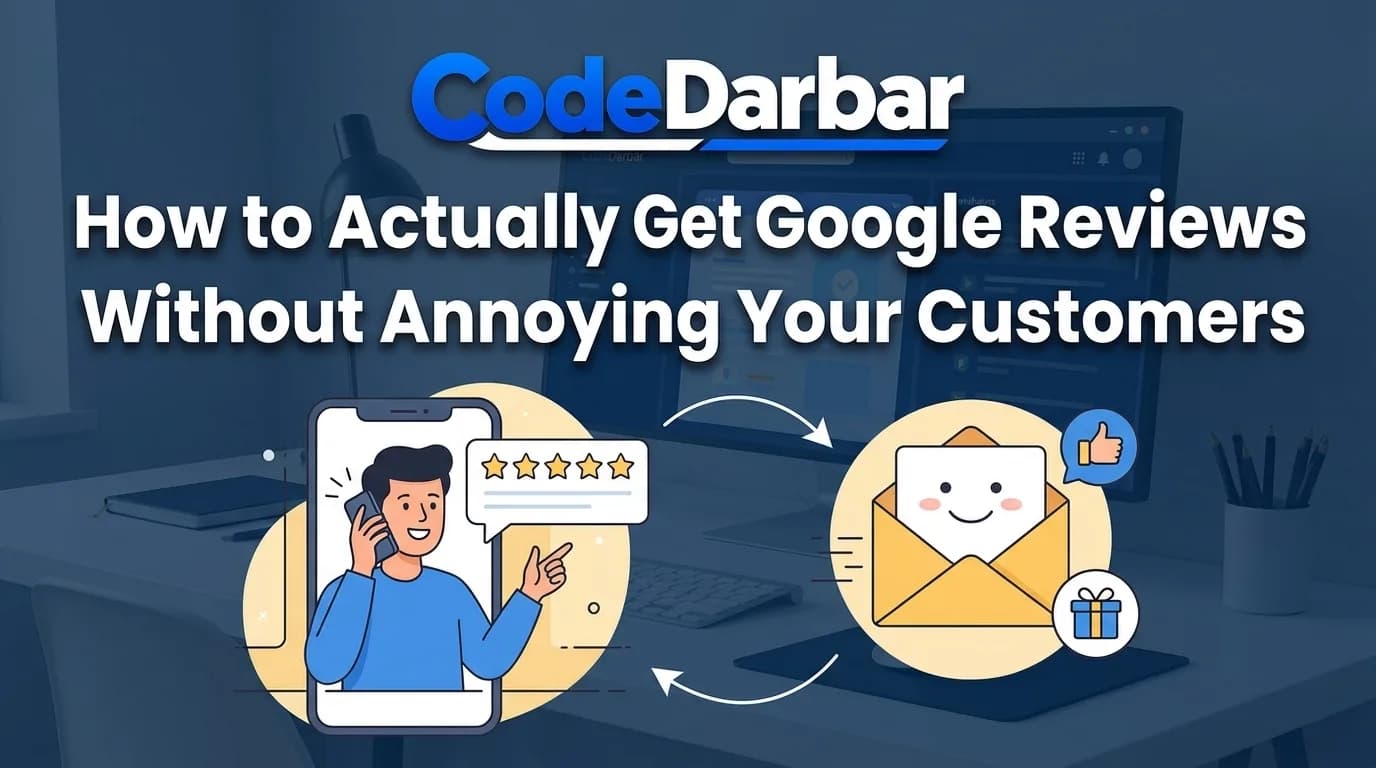
How To Actually Get Google Reviews Without Annoying Your Customers
Reviews are the cheapest ranking factor you have and the one most businesses handle worst. The timing matters more than the asking, and three things will get your reviews deleted.
Two businesses on the same street, same service, same prices. One has 94 reviews at 4.6 stars. The other has 7 at 5.0. The first one gets the call, every time.
It is not only about ranking. A profile with 90 reviews looks like a business that has been doing this for years. A profile with 7 looks like a business that might not answer the phone.
Ask at the right moment, not at the end
Most businesses ask when they send the invoice. That is the worst possible moment — the customer is thinking about money, not about how pleased they are.
Ask at the point of relief. The repair worked. The delivery arrived early. The problem they were worried about turned out to be nothing. That moment is usually days before the invoice, and the difference in response rate is not small.
Make it one tap
Google gives every profile a short review link. It is in your Business Profile under "Ask for reviews". Send that link directly — in WhatsApp, in the follow-up message, on a card with a QR code.
Every extra step costs you a large share of the people who intended to do it. "Search for us on Google and leave a review" is four steps. A link is one.
Three things that get reviews removed
- Incentives. Discounts or entries into a draw in exchange for a review violate Google's policy. Reviews collected that way can be stripped in bulk, and you lose the honest ones caught alongside them.
- Collecting them on one device. Twenty reviews from the shop's own tablet, on the same IP, look exactly like what they look like.
- Gating. Asking "were you happy?" first and only sending the link to the people who say yes is against policy, and it also produces a profile that reads as suspiciously perfect.
Reply to all of them, especially the bad ones
A reply is public, and it is not written for the person who complained. It is written for the next person reading, who will decide what kind of business you are by how you handled it.
Short, specific, no defensiveness, no argument about the facts. "You are right that we were late, and we have changed how we schedule Fridays" does more for you than the complaint cost.
A 4.6 with answered complaints converts better than a flawless 5.0 with nothing but five-word praise. People trust the imperfect one.
Keep it steady
Thirty reviews in one week after two silent years is a pattern, and it reads as a campaign rather than as customers. A few every month, continuously, is worth more than a burst — and it also means your most recent review is never two years old, which is the first thing people check.
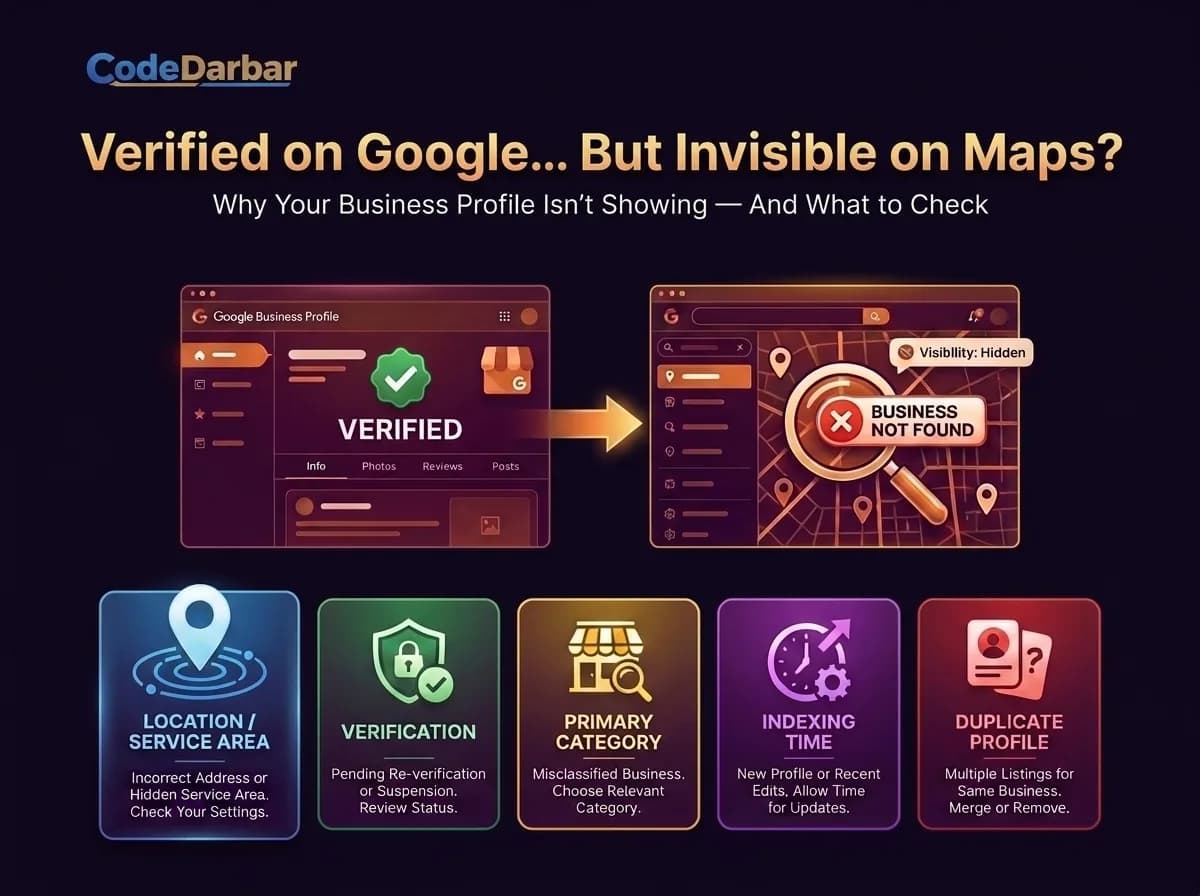
If you are not sure your profile is even eligible to be found, that is a separate problem and a common one — a profile with no address or service area never appears in Maps at all.