Search Console Finally Shows AI Visibility: How To Read The New Reports
Google now separates impressions inside AI Overviews and AI Mode from ordinary search results. Here is where to find the data, what it does and does not tell you, and which numbers are worth acting on.
For two years the honest answer to "are we showing up in AI results?" was that nobody could tell you. You could see your rankings. You could see your traffic falling. Connecting the two was guesswork.
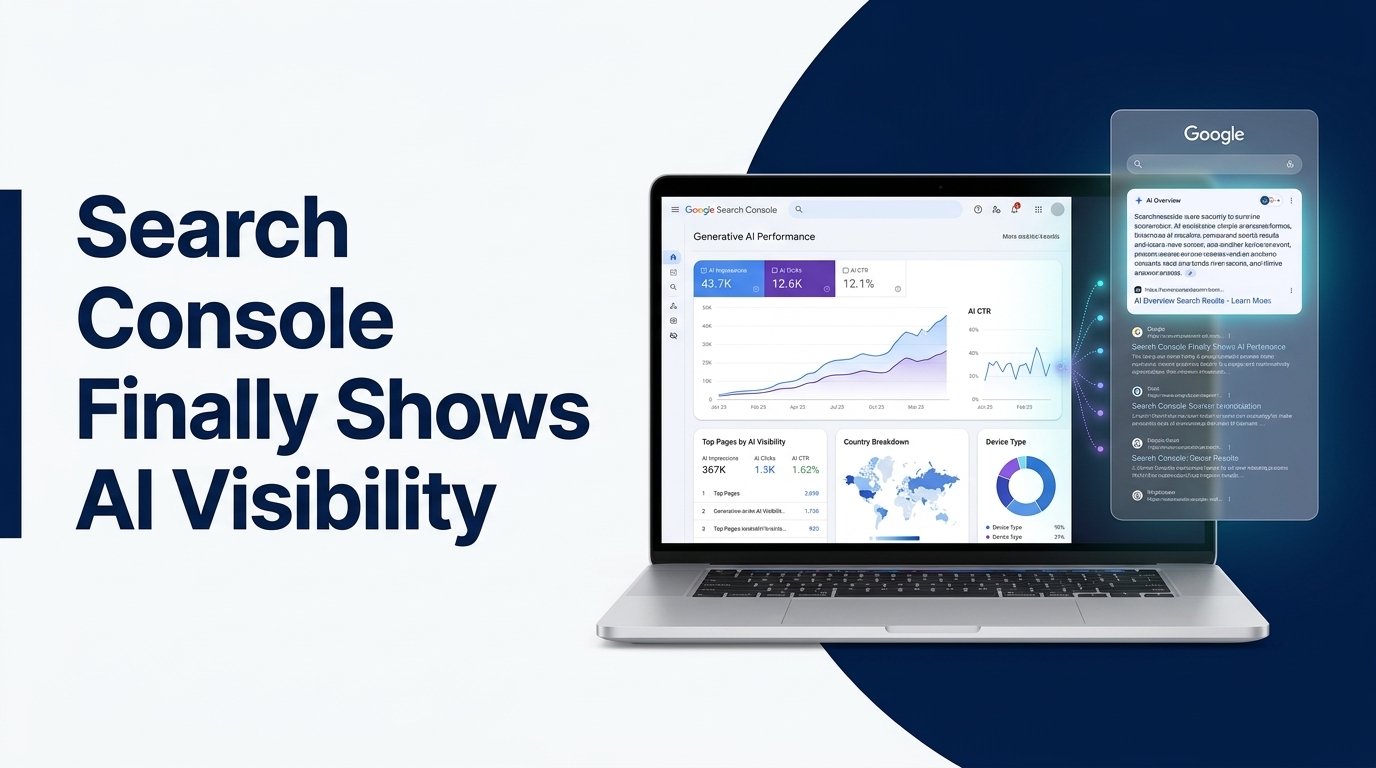
That changed in June 2026, when Google added reporting that separates impressions inside its generative surfaces — AI Overviews, AI Mode, and the AI features in Discover — from ordinary search results. It is the first view of AI visibility that comes from Google rather than from a tool estimating on your behalf.
It is genuinely useful. It is also easy to over-read, so it is worth being clear about what it does and does not answer.
What the reports give you
Impressions inside AI features
How often your pages appeared inside a generative answer, rather than in the ten blue links. This is the number people have been guessing at.
Which pages get cited
Page-level data showing which of your articles are being used as sources. This is the most actionable part, and we will come back to it.
Device and geography
Segmented by country and device, which matters if you sell in one market and get cited in another.
What it does not give you
Clicks from AI Mode do not separate cleanly from ordinary web search, and referrer information is often missing entirely. So you can see that you were cited, and you can see your total traffic, but joining those two into "this citation sent us this many visitors" is still not reliable.
Treat the reports as a visibility measure, not an attribution one. That is a real limitation, and anyone selling you a tool that claims to close the gap completely is overstating what is available.
The numbers that are worth acting on
Which pages get cited, and which do not
This is the whole value of the report. If three of your pages are cited constantly and twenty never are, the three are telling you what format works for your subject. Usually it is the ones that answer a specific question directly, near the top, in plain language, with something concrete in them — a price, a number, a process, a comparison.
Your general service pages, the ones full of adjectives, tend not to get cited at all. That is information.
Impressions rising while clicks fall
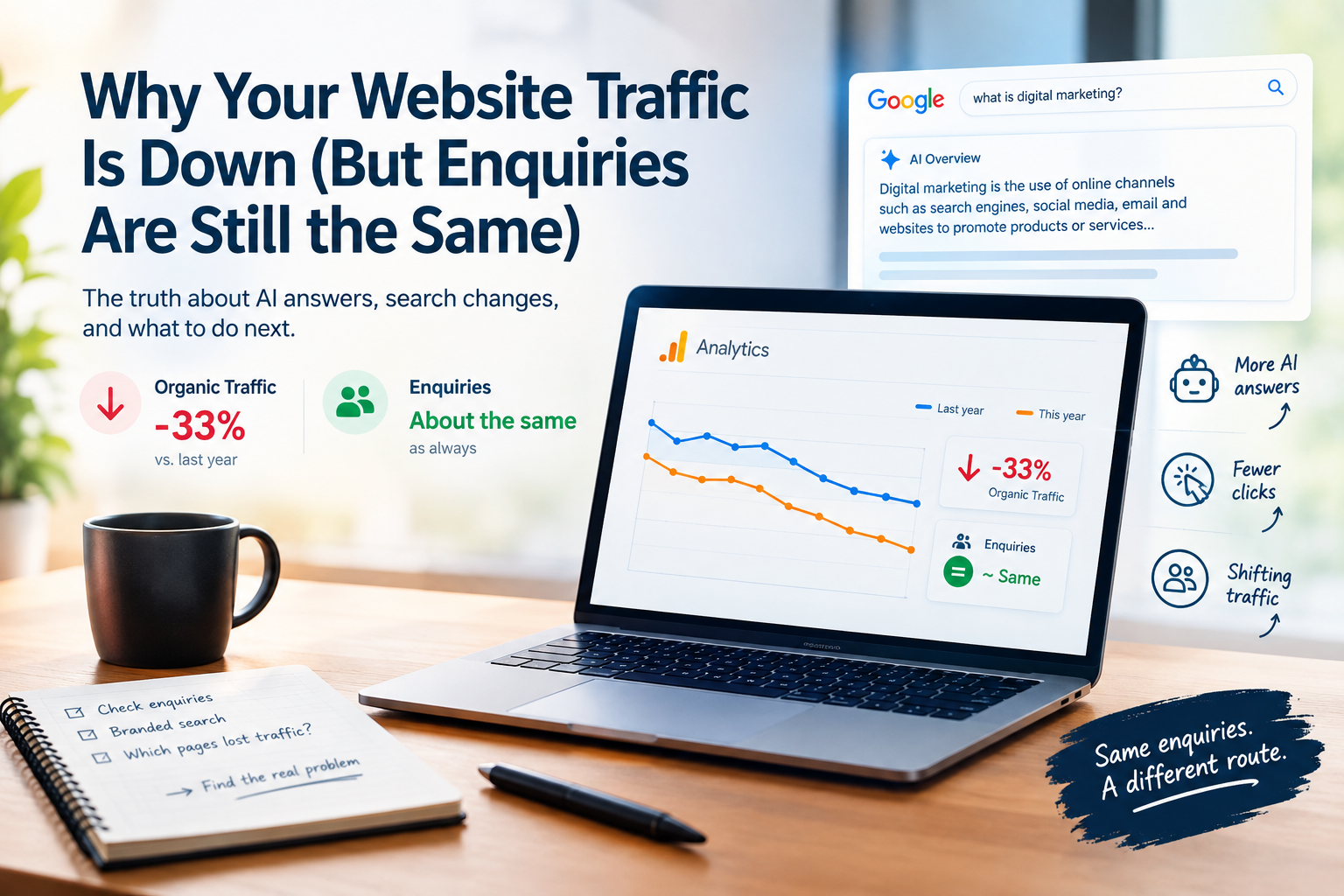
This is the pattern most businesses see and it is uncomfortable, because it looks like losing. What it usually means is that the answer is being given without the click. Measurements vary, but studies of queries where an overview appears report organic click-through dropping by a third or more, and desktop taking it worse than mobile.
The correct response is not to panic about traffic. It is to check whether enquiries moved. More on that below.
Branded search volume
The one number people forget to look at. If being cited works, you see it here first: someone reads your name in an answer and later searches for you directly. Branded search rising while organic clicks fall is not a decline, it is a change of route.
What to change once you have looked
Put the answer first
Pages that get cited tend to answer the question within the first few lines of a section rather than building up to it. A short, direct summary immediately under each heading is the single most repeated structural finding.
Give it something specific to quote
A model cannot cite an adjective. It can cite a number, a deadline, a price range, a step. The pages of yours that get cited will almost certainly be the concrete ones.
Make sure a machine can identify you
Structured data describing your business, your services and your author is what lets a model connect a page to an organisation with confidence. This is dull work with no visible payoff, and it is the difference between being quoted and being read past.
Measure the thing that pays you
The most useful habit here has nothing to do with the new reports. Alongside impressions and clicks, track enquiries per month. If clicks fall thirty percent and enquiries hold steady, the visitors you lost were reading a definition and leaving.
Traffic was always a proxy for business. When the proxy breaks, go back to the thing it was standing in for.
Figures quoted are drawn from published industry measurements and vary by sector and query type. Your own Search Console data beats any of them.