What Actually Decides What A Website Costs
The same brief gets quoted at AED 3,000 and AED 60,000, and both can be honest. Five things move the number, and only one of them is design.
Ask three agencies for a website and you will get three numbers that look unrelated. It is the most common reason businesses stall on the decision — not the cost, the inability to tell what the cost is for.
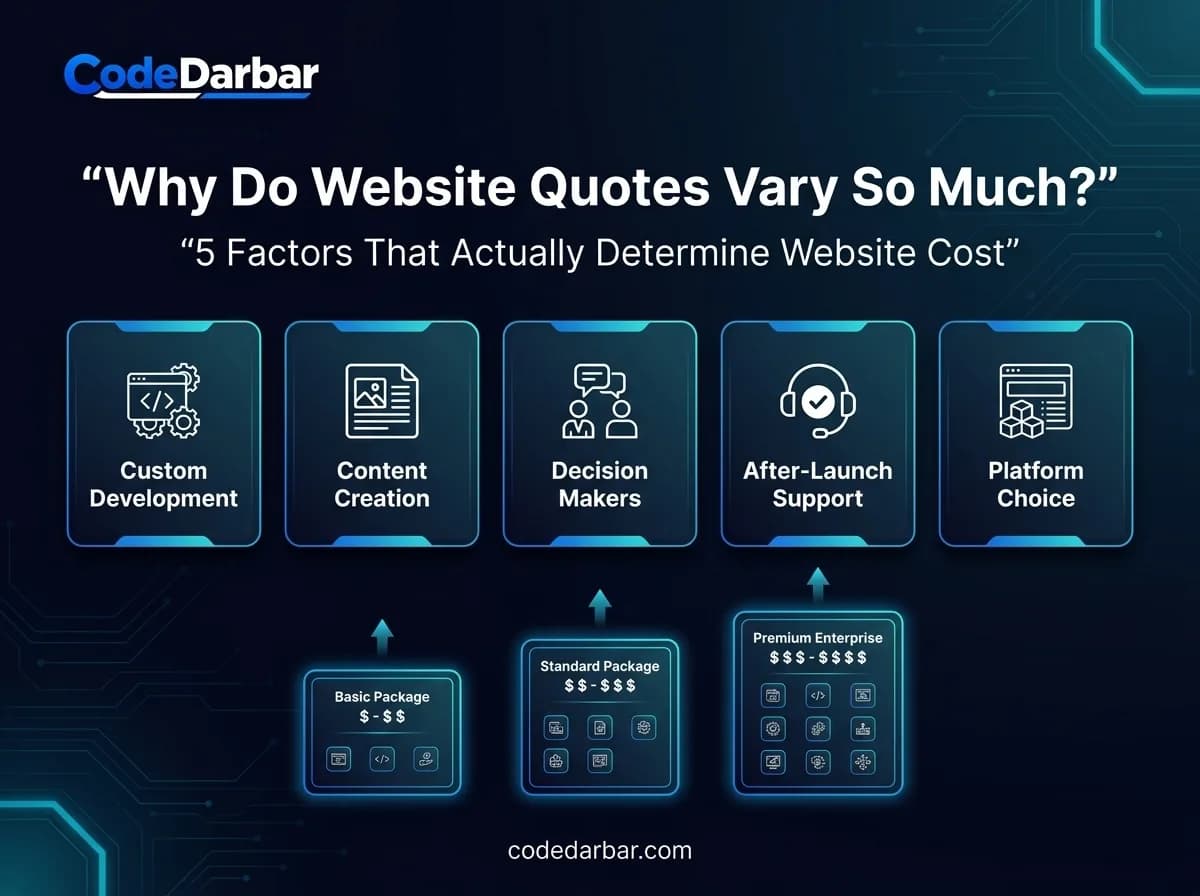
Five things move the number. Knowing which ones apply to you turns a confusing range into a decision.
1. Whether anything has to be built
This is the big one, and it is usually invisible in the brief.
A site that presents information — services, about, contact, a blog — is largely assembly. A site that does something is software: a booking system that must not double-book, a calculator that must be right, a customer portal, an integration with the system you already run your business on.
The first is measured in days. The second is measured in weeks and needs testing, because the cost of it being wrong is a customer, not a typo.
2. Who writes the content
The quiet budget killer. A quote almost always assumes you supply the words and images.
If you do not — and most businesses do not, because it is harder than it looks — someone has to interview you, write the pages, source photography and edit it. That is real work by a different specialist, and it is the single most common reason a project runs late rather than over budget.
Decide this before you compare quotes, or you are comparing different things.
3. How many people have to agree
A project with one decision-maker moves. A project with a committee does the same work several times.
Agencies price this whether or not they name it. If your quote includes many revision rounds and long approval stages, you are paying for the process, not the pixels.
4. What happens after launch
A website is not a purchase, it is something you own. Hosting, domains, SSL, plugin updates, security patches, backups, and someone to call when it breaks at 9pm on a Thursday.
Some quotes include a year of this. Some include none and you find out later. Ask specifically, because the cheapest build with no support often costs more in year two than the expensive one that included it.
5. The platform, but less than you think
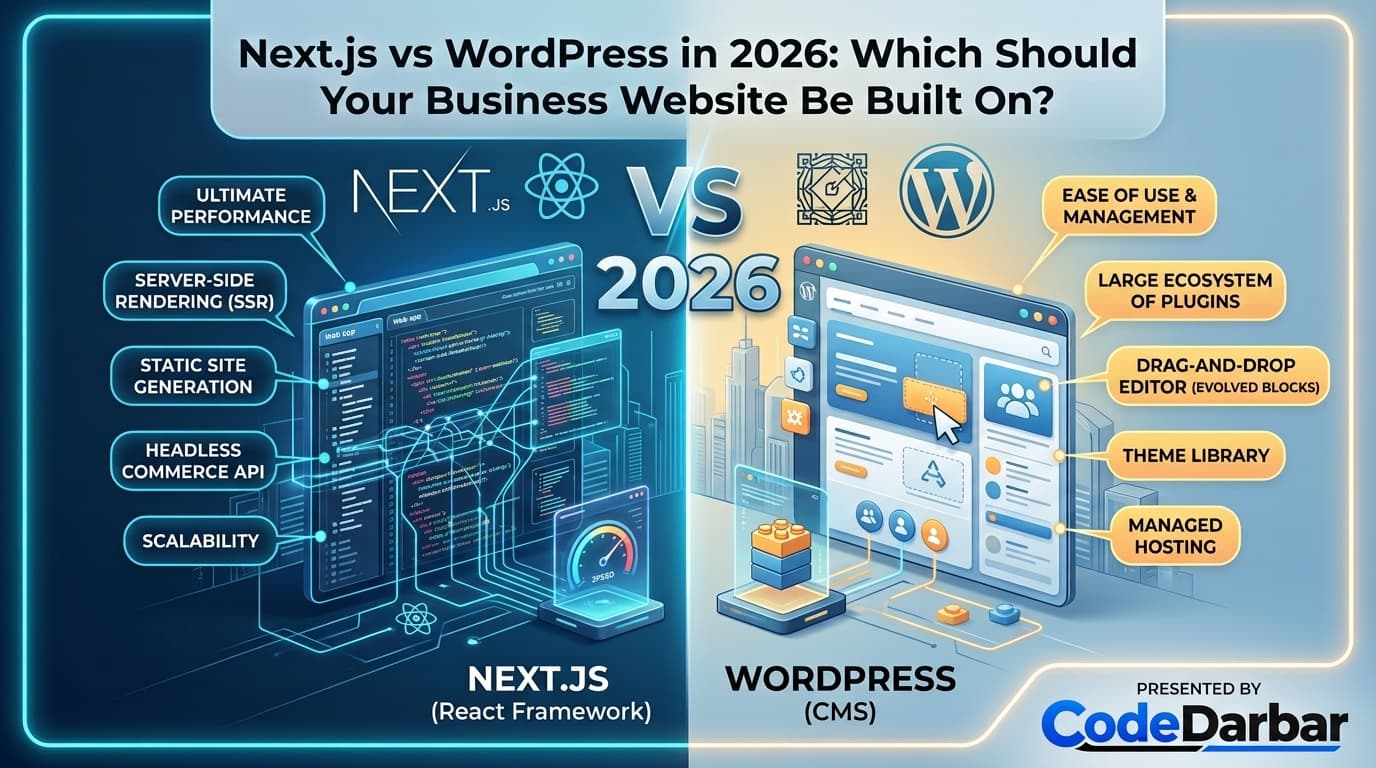
WordPress, Shopify, a custom build — this changes the number, but less than the four above. A well-built WordPress site and a custom one can cost the same if the requirements are the same. The platform matters most for what it costs you later: a plugin-heavy site is cheap to start and expensive to maintain.
How to compare quotes honestly
Ask every agency the same four questions, and the range will stop looking random:
- What exactly is built, and what is assembled from something existing?
- Who writes the content, and is that in this price?
- What happens in the twelve months after launch, and what does it cost?
- Who owns the code, the domain and the hosting account when we are done?
That last one catches people out more than any price. If you cannot take your site elsewhere, the quote was never the real number.
On the cheapest option
A very low quote is usually honest about something — it just is not saying what. Normally it is a template with your logo, no content work, no support, and no ownership. That can be exactly right for a business that needs a presence and nothing more. It is a bad surprise for one that expected a system.
Our own prices are published, including what is and is not in them, because a range you cannot interrogate is not information. If you are weighing quotes and want a second opinion on what you are actually being offered, ask — we will tell you if the cheap one is the right one.