What An AI Chatbot Can (And Can'T) Do For Your Business
A realistic look at business chatbots built on models like Claude or GPT: what they handle well, where they fail, what they cost, and how to decide if you need one.
Chatbots have gone from clunky decision trees to assistants that can read your documentation and answer in natural language. That leap has created a lot of hype, and a lot of disappointment when a bot that "understands everything" in a demo starts inventing refund policies in production. This is a plain guide to what modern AI chatbots genuinely do well, where they break, and how to think about the decision.
What a modern business chatbot actually is
Most useful business chatbots today combine a large language model (Claude, GPT, Gemini and similar) with your own content through a technique called retrieval-augmented generation, or RAG. When someone asks a question, the system first looks up the most relevant passages from your documents, then asks the model to answer using only those passages. The model supplies the language; your content supplies the facts.
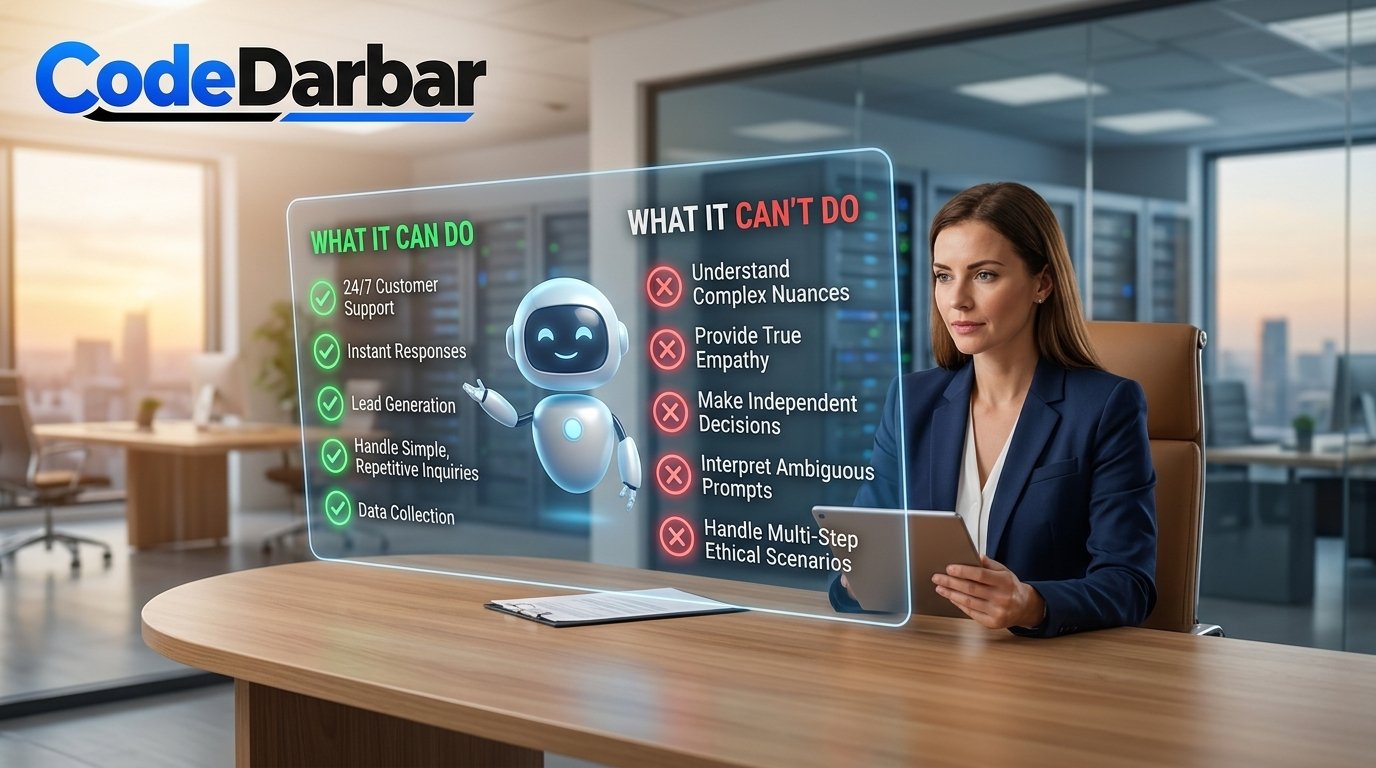
What it does well
- Answering repetitive questions instantly. Opening hours, shipping policies, "which plan includes X", how-to questions from your help docs — the things your team answers ten times a day.
- Working outside business hours. A visitor at 11pm gets a real answer instead of a form and a wait.
- Qualifying leads. A bot can ask what a visitor needs, collect an email, and hand a summary to a human — on your website or on WhatsApp.
- Multilingual support. Language models handle many languages fluently, which is valuable if your customers do not all write in English.
- Drafting, not deciding. Summarising a long support thread for a human agent, or drafting a reply for them to approve, is low-risk and saves real time.
Where it fails
- Anything it was not given. If a fact is not in your content, a poorly-built bot will make one up. A well-built bot says "I don't know, here's how to reach a person." Insist on the second behaviour.
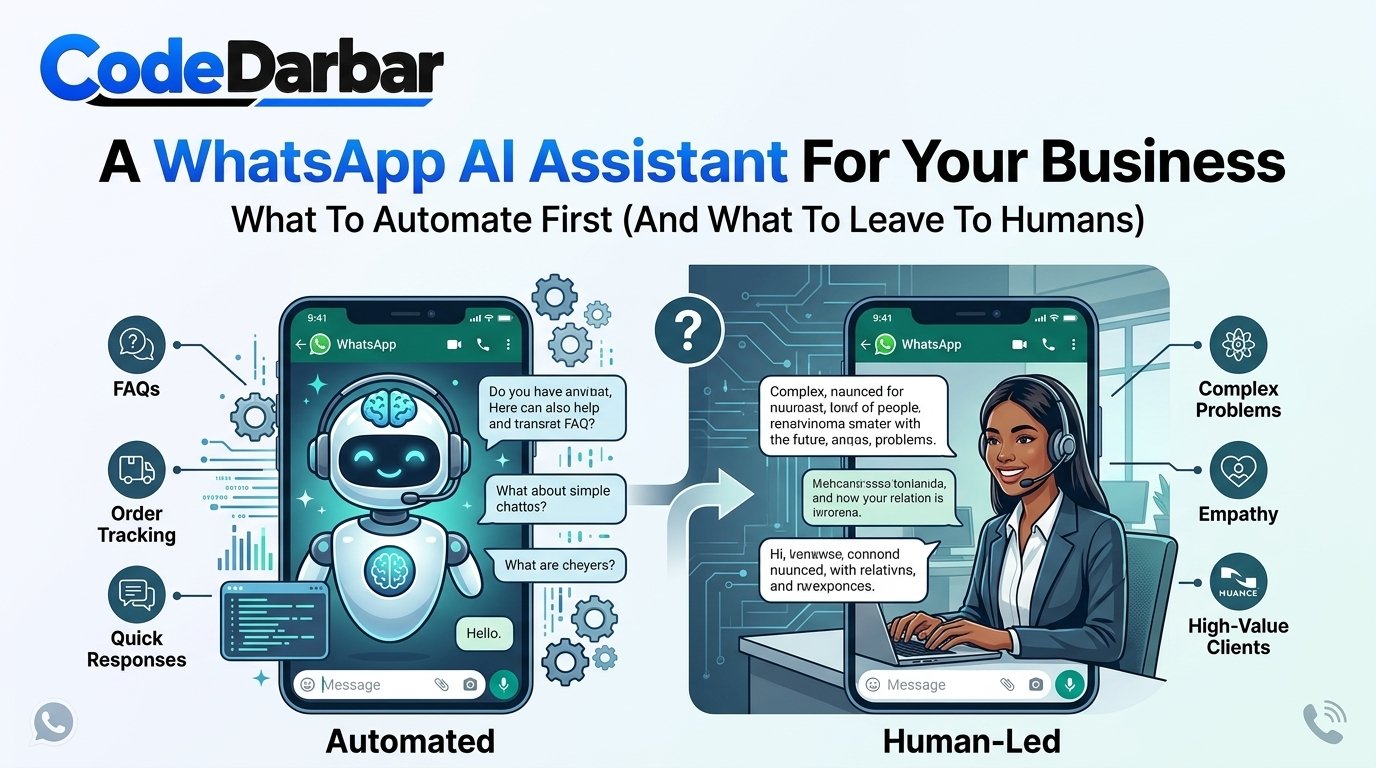
- Judgement calls. Approving an exception, negotiating, handling an upset customer — these need a human. The bot's job is to recognise the situation and hand off quickly.
- Actions with consequences. A chatbot that can issue refunds or change bookings needs the same permission checks and audit trail as any other system that can. That is an AI agent project, not a chatbot project, and it should be scoped as one.
- Stale content. The bot is only as current as the documents behind it. If your pricing page changes and nobody updates the bot's sources, it will confidently quote the old price.
What it costs
There are two costs: building it and running it. Running costs are the model provider's usage fees (typically fractions of a cent per message at the volumes a small business sees) plus hosting. Building it depends on how many sources you have, where it lives (website, WhatsApp, both), and whether it needs to take actions. Code Darbar quotes a RAG chatbot trained on your data as Custom, because the range between "answer questions from a handful of pages" and "connect to our booking system and CRM" is wide. A short scoping call is enough to give a fixed figure.
Signs you are ready for one
- You already have written answers — help docs, FAQs, policies, product pages — for the questions people ask.
- Your team spends noticeable time each week on the same handful of questions.
- You get enquiries outside business hours, or from other time zones or languages.
- Someone on your side will own keeping the content up to date.
If most of those are not true yet, a good FAQ page and a fast contact form will likely serve you better than a bot, and cost far less.
How to do it well
- Start with a narrow scope — one product line or one category of question — and expand once it is reliable.
- Require an "I don't know" path and an obvious handoff to a human.
- Review the conversation logs weekly for the first month. They show you exactly what customers ask and where your content has gaps.
- Never let the bot promise outcomes, discounts or timelines it has not been explicitly given.
Talk it through
The assistant on this site is built exactly this way: it only knows what the site says and points you to a person for everything else. If you want something similar for your business, ask it, use the contact page, or request a free AI-readiness audit and we will tell you honestly whether a chatbot is worth it yet.